
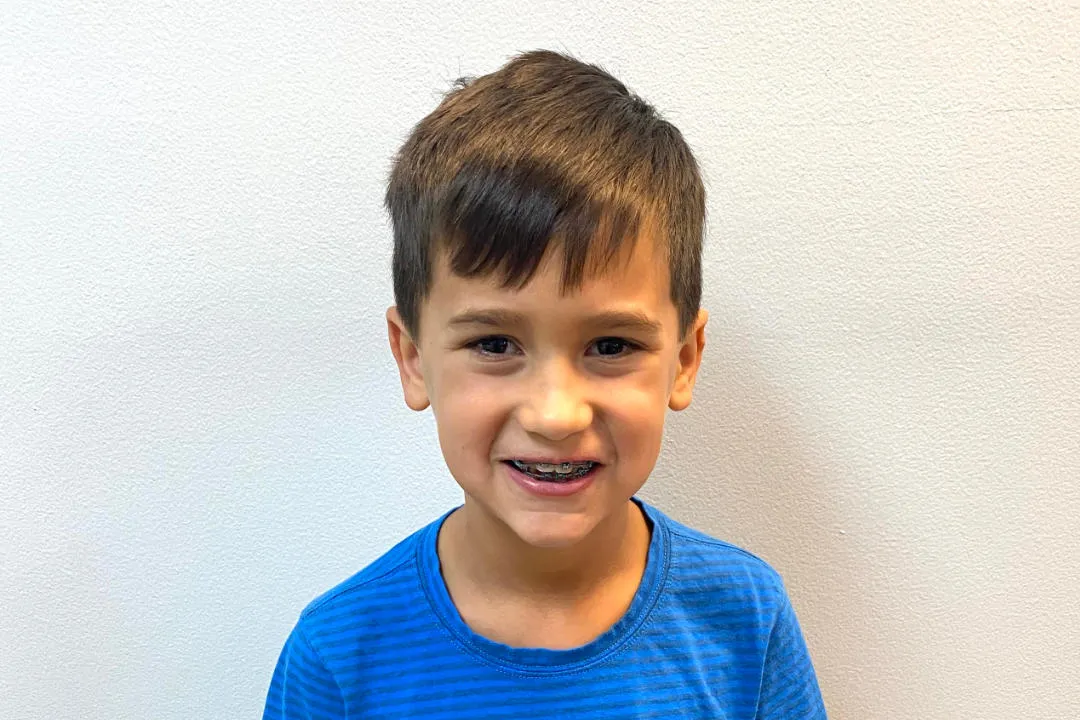
There is no single right age for braces. The American Association of Orthodontists recommends a first check-up around age 7, and many children start braces later, once most adult teeth are in. An early visit simply tells you whether to act now or wait.
At Guidry & Horaist Orthodontics, we meet many Lafayette and Crowley parents who are unsure whether their child is too young, right on time or maybe a little late. Dr. David Guidry and Dr. Doug Horaist are both fathers themselves, and they would rather a parent ask early than worry quietly. Here is how we think about timing, what to watch for and what happens at that first visit.
Why Does the Age-7 Check-Up Matter?
Problems are easier to spot early
Around age 7, most children have a mix of baby teeth and adult teeth, and the jaws are still growing. That makes it a good time to see how the bite is developing. The American Association of Orthodontists recommends that children visit an orthodontist for an evaluation right around their seventh birthday.
A check-up is not a commitment
An evaluation at 7 does not mean braces at 7. For many children, the answer is simply to keep an eye on things and check back as more adult teeth come in. Some children benefit from earlier help, and finding that out sooner gives you more choices.
What Signs Suggest My Child May Need Braces?
Things parents can notice at home
You do not need to be an expert to notice when something looks off. Bring it up with an orthodontist if you see:
- Crowded or overlapping teeth, or adult teeth coming in behind baby teeth
- Large gaps between teeth
- Front teeth that stick out noticeably
- Upper teeth that sit behind the lower teeth when your child bites down
- Teeth that do not meet when the back teeth are together
- Baby teeth lost very early or very late
- Jaws that shift to one side when biting, or difficulty chewing
- Mouth breathing or a long-lasting thumb-sucking habit
When your dentist mentions it
Your family dentist sees your child regularly and may suggest an orthodontic visit. Keep up those dental check-ups during any orthodontic treatment too. The dentist keeps teeth clean and healthy while we focus on alignment and the bite.
Should My Child Be Treated Early or Wait?
When waiting makes sense
Many crowding and spacing concerns are best treated once most adult teeth are in. In that case, we will recommend checking growth periodically rather than starting anything right away. Waiting is a real plan, not a brush-off.
When earlier treatment can help
Some bite problems involve how the jaws are growing. Our doctors trained in dentofacial orthopedics, which is the management of tooth movement and facial development. When a child’s bite or jaw growth suggests early help would make a difference, they will explain why and what it would involve.
A quick timing guide
| Child’s stage | What usually happens | What parents can do |
|---|---|---|
| Around age 7 | First orthodontic evaluation with X-rays and photos | Schedule a check-up, even if teeth look fine |
| Mixed baby and adult teeth | Monitoring growth, or early treatment if needed | Watch for the signs above; keep dental visits |
| Most adult teeth in | Comprehensive treatment often begins | Compare braces and aligner options |
| After treatment | Retainers keep teeth in place | Help your child wear retainers as directed |
What Happens at a Child’s First Orthodontic Visit?
A relaxed, no-cost visit
Your child’s first visit with us is complimentary. It includes X-rays, photos and impressions taken with a digital scanner rather than goopy putty. Our iTero scanner uses a small wand to capture 3D images in minutes, which most kids find easy.
What you will learn
The doctor will look at the teeth, jaws and bite and explain what they see in plain language. You will hear whether your child needs treatment now, later or not at all. Our first visit guide explains each step.
What Types of Braces Work Well for Kids?
Metal braces with colored ties
Metal braces are effective for even complex problems, and kids love choosing from dozens of colors for their elastic ties at each appointment. Our low-profile brackets are designed for a comfortable fit.
Other options
Clear ceramic braces blend in with the teeth but need a little extra care to stay looking their best. Self-ligating brackets use a sliding door instead of elastic ties, so adjustment visits tend to be shorter. Some children are also candidates for clear aligners; our Invisalign for kids page explains how that works. Learn more on our braces for kids page.
How Long Will My Child Wear Braces?
It depends on the bite
Treatment time depends on how much correction is needed. Across braces patients, the average treatment time is between one and two years, and more complex problems take longer than simple alignment.
Finishing well
When braces come off, your child will get retainers to keep teeth in their new positions. Teeth can shift back after treatment, so wearing retainers as instructed is part of the plan, not an extra.
How Can Parents Help During Treatment?
Food and cleaning habits
Help your child avoid sticky, hard and crunchy foods, including gum, taffy, popcorn, hard fruits and vegetables, and corn on the cob. Encourage slower, more thorough brushing and daily flossing, especially after meals.
Handling soreness and small problems
Teeth may feel sore for a couple of days after braces go on or after an adjustment. A warm salt-water rinse, soft foods and Tylenol or ibuprofen usually help. If a bracket loosens or a wire pokes, orthodontic wax buys time until a repair. Our emergency care page covers what to do.
How Do Families Plan for the Cost?
Talking about budget early
The cost depends on your child’s needs and treatment plan. At the consult, our Treatment Coordinator talks about your goals and budget. We offer flexible down payments and monthly payment options, accept most dental insurance and help file claims.
Where Can Lafayette Families Get Their Child Checked?
Two Acadiana offices
We see children at our Lafayette office on Camellia Boulevard and our Crowley office on North Eastern Avenue. If your child is around 7, or you have noticed any of the signs above, request a complimentary consult and we will help you decide on the right timing together.
Frequently Asked Questions
Is 7 too young for braces?
Most 7-year-olds do not need braces. The age-7 visit is an evaluation to see how the teeth and jaws are developing. Treatment at that age is only suggested when there is a clear reason to start early.
What if my child is already 12 or 13?
That is a very common age to start braces, since most adult teeth are usually in by then. It is not too late. Schedule a consult and we will explain the options.
Will braces hurt my child?
Braces generally are not painful, but there can be some discomfort after they go on and after some adjustments. Over-the-counter pain relievers and soft foods are usually enough. The soreness typically fades in a couple of days.
Can my child keep playing sports with braces?
Yes, kids with braces can stay active. Ask our team about protecting the mouth during contact sports. If an accident happens, use ice right away and call the office if teeth or wires are displaced.