
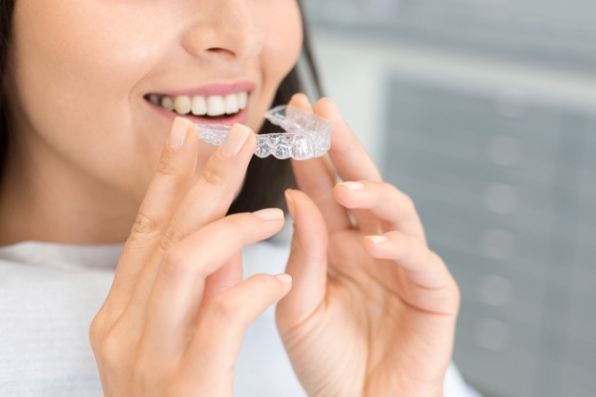
Understanding Your Two Main Orthodontic Options as an Adult
If you’re an adult considering orthodontic treatment, you’re not alone. Adult orthodontic treatment has grown significantly over the past decade, and the American Association of Orthodontists reports that a growing number of patients in their 20s, 30s, 40s, and beyond are choosing to straighten their teeth. Across the Acadiana community and beyond, more adults than ever are exploring their options. Deciding between Invisalign vs braces and which is better for adults depends on your unique dental needs, daily habits, and personal goals.
So what’s the actual difference? Invisalign uses removable clear plastic aligners to gradually shift teeth, while metal braces use fixed brackets and archwires to apply steady, continuous pressure. Both deliver excellent results, but they work differently and suit different lifestyles.
Both treatments are FDA-cleared and effective for many orthodontic concerns in adults. Whether you have crowding, spacing, or bite issues, modern orthodontics offers solutions that are significantly more comfortable than what your parents went through decades ago. Adults in Lafayette, LA and surrounding areas evaluate both options every day with help from the team at Guidry & Horaist Orthodontics.
The good news? You don’t have to figure this out alone. An orthodontic specialist can evaluate your specific situation and recommend the option that makes the most sense for your teeth, your lifestyle, and your goals. A complimentary consult is the best place to start, and it costs you nothing but a little time.
How Invisalign and Braces Work to Straighten Adult Teeth
Understanding the mechanics behind each treatment can help you feel more confident about your decision. Both methods are backed by decades of clinical research and are safe for adult patients. Here’s a closer look at how each one moves your teeth.
How Does Invisalign’s Digital Approach Work?
Board-certified orthodontic specialists like Dr. Guidry and Dr. Horaist use 3D digital scanning and specialized software to map out exactly how your teeth will move from start to finish. You’ll receive a series of Invisalign aligners, each one slightly different, that guide your teeth through small, precise movements.
Most people switch to a new set every week or two. Because aligners are removable, you take them out to eat, drink anything other than water, and brush your teeth. This flexibility is one of the biggest draws for adults.
How Do Braces Apply Pressure?
Braces work through continuous, controlled pressure. Brackets are bonded to each tooth, and an archwire connects them all. During regular visits, your orthodontist adjusts the wire to keep your teeth moving in the right direction. Unlike aligners, braces stay on your teeth throughout treatment, so you don’t have to remember to put them back in.
How Long Does Each Treatment Take?
For adults, Invisalign treatment typically takes 12 to 18 months, while braces often require 18 to 24 months. Your actual timeline depends on the complexity of your case. Either way, you’ll wear a retainer after active treatment to keep your results looking great for years to come.
Key Benefits of Invisalign and Braces for Adult Patients
Invisalign offers near-invisible aesthetics and removability, making it a popular choice for working professionals and adults who want discretion during treatment. Braces deliver stronger correction for complex bite issues and severe crowding, and they work around the clock without relying on patient compliance. The right choice depends on what matters most to you.
Why Do Adults Choose Invisalign?
- Nearly invisible appearance. Clear aligners blend in with your smile, ideal for professional and social settings.
- Removable for eating and oral hygiene. No food restrictions, and you can brush and floss normally.
- Fewer office visits. Many Invisalign plans require visits only every six to eight weeks.
- Comfortable fit with no brackets or wires irritating your cheeks and lips.
- Predictable visualization. You can see a digital preview of your expected results before treatment even begins. For many adults in Lafayette, this preview is the moment they decide to move forward.
Why Do Adults Choose Braces?
- Effective for complex cases. Severe crowding, significant rotations, and complex bite issues often respond better to braces.
- No compliance concerns. Braces work around the clock without requiring you to remember to wear them.
- Often more affordable than Invisalign, making metal braces a practical choice for many adults.
- Ceramic options available. Tooth-colored ceramic braces offer a more discreet look while providing the power of metal braces.
- Backed by decades of clinical research supporting their effectiveness across virtually every type of case.
- Your orthodontist can make real-time adjustments at each visit, giving more control over complex tooth movements.
Both treatments improve more than just aesthetics. Straighter teeth are easier to clean, which supports better oral health. Correcting bite issues can reduce jaw soreness, uneven wear on teeth, and even headaches.
Invisalign vs Braces for Adults: A Side-by-Side Comparison
When comparing these two treatments, several factors come into play. During a complimentary consult, we walk you through each of these factors so you can make a confident decision. Here’s how the two options stack up:
| Factor | Invisalign | Braces |
|---|---|---|
| Visibility | Nearly invisible clear plastic | Metal brackets visible; ceramic brackets less noticeable |
| Removability | Removable for eating and cleaning | Fixed throughout treatment |
| Comfort | Smooth plastic; no wires | May cause initial soreness; brackets can irritate cheeks |
| Diet Restrictions | None, just remove aligners to eat | Avoid hard, sticky, and crunchy foods |
| Daily Wear Time | Must wear 20 to 22 hours per day | Works continuously, no effort required |
| Office Visits | Typically every 6 to 8 weeks | Usually every 4 to 6 weeks |
| Best For | Mild to moderate alignment issues | Complex malocclusions and severe bite problems |
| Maintenance | Clean aligners daily; brush normally | Careful brushing around brackets; may need special tools |
How Visible Is Each Option?
For many adults, appearance is a top concern. Invisalign wins here. The aligners are genuinely difficult to notice during normal conversation. If you’re not ready for clear aligners but want something subtle, ceramic braces blend with your natural tooth color and are far less obvious than metal brackets.
What About Wearing Aligners Consistently?
Here’s something worth considering: Invisalign only works if you wear the aligners. That 20 to 22 hours of daily wear is non-negotiable. If you know you’ll struggle to keep them in, or you travel frequently and might lose a set, braces remove that variable entirely. They’re always working, whether you think about them or not.
Which Option Works Better for Different Cases?
Braces can handle virtually any orthodontic situation. Invisalign has come a long way and now treats many complex cases successfully, but severe bite problems, significant tooth rotations, or cases requiring vertical tooth movement may still respond better to braces. Your orthodontist can tell you which option will give you the best results based on a thorough evaluation.
How Much Do Invisalign and Braces Cost for Adults?
Invisalign for adults typically costs $3,000 to $8,000, while metal braces range from $3,000 to $7,000. Ceramic braces usually cost slightly more than metal. Final pricing depends on case complexity, treatment duration, your region, and provider experience. Here’s what drives those numbers and how to make treatment work with your budget.
What Affects Your Cost?
Several factors influence your final investment:
- Case complexity. More severe alignment issues require longer treatment and more resources.
- Treatment duration. Longer treatment means more aligners or more adjustment visits.
- Regional pricing. Costs vary depending on where you live. Pricing in the Lafayette, LA area may differ from national averages.
- Provider experience. Board-certified orthodontic specialists may charge differently than general dentists offering aligners. The level of training and oversight you receive matters for your results.
What Insurance and Payment Options Are Available?
Many dental insurance plans now cover adult orthodontics, often with a lifetime maximum benefit that applies to either treatment option. Guidry & Horaist Orthodontics also offers low monthly payment options that work with your budget. The best way to understand your actual cost is to schedule a complimentary consult with an orthodontic specialist who can give you a personalized treatment plan with clear pricing, no guesswork involved.
Are You a Good Candidate for Invisalign or Braces?
Most adults with healthy teeth and gums are candidates for either Invisalign or braces. Here’s how to think about which might work best for you.
Are You a Good Candidate for Invisalign?
- You may be a good candidate if your alignment issues are mild to moderate, such as spacing, minor crowding, or slight bite issues.
- You’re disciplined about wearing aligners consistently throughout the day and night.
- You want the flexibility to remove your orthodontic appliance for special occasions.
- Aesthetics during treatment are a high priority for your professional or personal life.
Should You Choose Braces Instead?
- You have severe crowding, significant rotations, or complex bite problems that need stronger mechanical control.
- You’re concerned about remembering to wear aligners consistently.
- You have multiple missing teeth, implants, or bridgework.
- Your orthodontist recommends them based on your specific case.
- You prefer a more budget-friendly option.
- You have extensive dental work like bridges that could complicate aligner treatment.
What Should Adults Consider Before Starting Treatment?
If you have periodontal (gum) disease, you’ll likely need treatment before starting orthodontics. Healthy gums are essential for safe tooth movement. Previous dental work doesn’t automatically rule out orthodontics. Many adults with crowns, veneers, or even some implants can still achieve a beautiful, healthy smile. An experienced orthodontic specialist like Dr. Guidry or Dr. Horaist at Guidry & Horaist Orthodontics in Lafayette, LA will evaluate your complete dental picture before making a recommendation.
How Can You Know for Sure Which Option Is Right?
Online quizzes and general guidelines can point you in a direction, but they can’t replace a professional evaluation. A board-certified orthodontic specialist will examine your teeth, take diagnostic images, and give you a definitive recommendation based on your unique situation. Scheduling a complimentary consult is the simplest way to get a clear answer.
Frequently Asked Questions About Invisalign vs Braces for Adults
Is Invisalign faster than braces for adults?
It depends on your specific case. For mild to moderate alignment issues, Invisalign often achieves results in 12 to 18 months. Braces typically require 18 to 24 months, though simpler cases may finish sooner. Your orthodontist can give you a realistic timeline during your complimentary consult.
Can adults get braces at any age?
Yes. There’s no upper age limit for orthodontic treatment. Adults in their 50s, 60s, and beyond successfully complete treatment every day. Your overall dental health matters more than your age.
Does Invisalign hurt more than braces?
Both treatments cause some discomfort, especially when you start a new aligner or have braces adjusted. Most patients find Invisalign slightly gentler because there are no brackets or wires to irritate soft tissues. Any soreness typically fades within a few days.
Can Invisalign correct an overbite in adults?
Yes, Invisalign can effectively treat moderate overbites in adults. The aligners work with small attachments bonded to teeth to achieve the necessary movements. Severe overbites may respond better to braces, which offer more precise control over tooth position.
How do I decide between Invisalign and braces?
Start with a complimentary consult with a board-certified orthodontic specialist. They’ll evaluate your teeth, discuss your goals and lifestyle, and recommend the option most likely to give you excellent results. Dr. David Guidry, DDS, Diplomate of the American Board of Orthodontics, and Dr. Douglas E. Horaist, DDS, Certificate in Orthodontics and Dentofacial Orthopedics, provide personalized recommendations at their Lafayette and Crowley locations.
Will my teeth shift back after treatment?
Without retention, teeth can shift over time. That’s why both Invisalign and braces patients wear retainers after active treatment. Following your orthodontist’s retainer instructions is the key to maintaining your results long-term.
If you’re ready to learn which treatment is right for you, upgrading your smile is simple & affordable. Our skilled & caring orthodontists would love to help you smile confidently, so let’s get started!